

What is a Gas Spring? A Deep Dive into the Working Principle
What is a Gas Spring? A Deep Dive into the Working Principle
For B2B buyers and wholesalers, understanding the technical foundation of a gas spring (often called a gas strut or gas shock) is essential for selecting the right supplier. While they may look like simple metal cylinders, gas springs are precision-engineered hydropneumatic elements designed to provide controlled lifting, lowering, and damping.
In this guide, we break down the gas spring working principle and why they have become the industry standard for automotive and industrial applications.
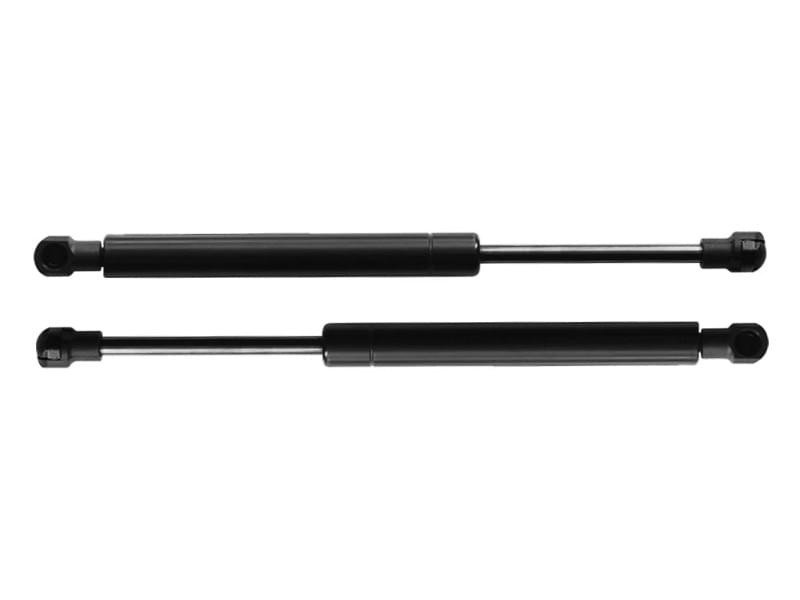
1). The Core Components of a Gas Spring
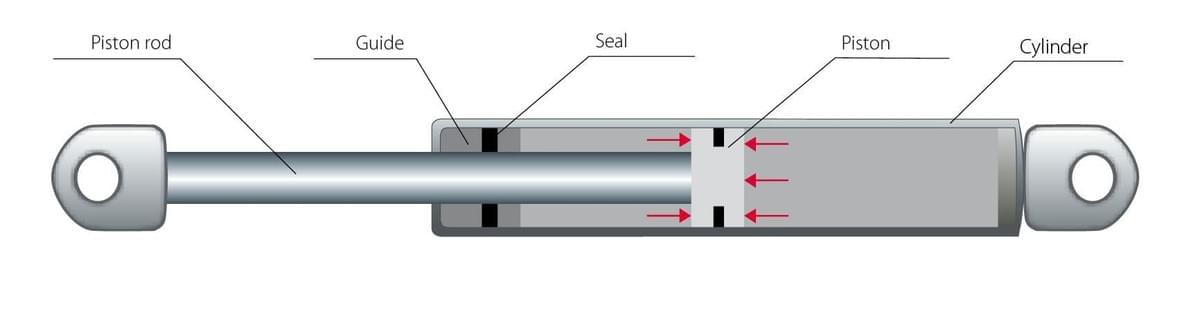
To understand how it works, you must first know what is inside. A high-quality gas spring consists of four primary gas spring components:
Pressure Cylinder: A high-strength steel tube that houses the gas and oil.
Piston Rod: The moving part that extends and retracts.
Piston Head: Features specialized orifices that control the flow of gas and oil.
Seal & Guide Package: The critical barrier that prevents nitrogen leakage and ensures smooth rod movement.
2). The Physics: How Does It Work?
The gas spring working principle is based on the pressure difference between the internal cylinder and the atmospheric pressure outside.
Inside the cylinder, high-purity nitrogen gas is compressed. Unlike a mechanical coil spring which relies on metal tension, a gas spring acts like a pneumatic battery. When the piston rod is pushed into the cylinder, the internal volume decreases, further compressing the nitrogen and creating a resistive force.
The force of a gas spring (F) can be simplified by the formula:
F = P x A
Where:
P = Internal pressure of the nitrogen gas.
A = The cross-sectional area of the piston rod.
Because the pressure inside the cylinder is significantly higher than the pressure outside, the rod is naturally pushed outward, providing the "lift" needed for car tailgates or heavy machinery covers.
3). Why Use Nitrogen? (Nitrogen Gas Spring Basics)
As a professional gas spring supplier, we are often asked why nitrogen is used instead of compressed air.
Inert Properties: Nitrogen is dry and non-reactive, which prevents internal corrosion of the cylinder.
Thermal Stability: Nitrogen pressure remains more consistent across varying temperatures compared to regular air.
Safety: Being an inert gas, it is non-flammable, making it safe for the high-pressure environments found in industrial gas struts.
4). Damping and End-of-Travel Control
One of the major advantages of gas strut mechanics is the ability to control speed. Most gas springs contain a small amount of oil. This oil serves two purposes:
Lubrication: Keeping the seals supple to prevent leaks.
Hydraulic Damping: When the gas spring reaches the end of its extension, the oil passes through the piston orifices, creating a "soft-stop" effect. This prevents the car hood or hatch from slamming open.
Summary for Wholesalers
Understanding the "What" and "How" of gas springs allows distributors to better communicate value to their end customers. A gas spring is not just a rod in a tube; it is a precisely pressurized safety device.
Are you looking for a reliable B2B gas spring supplier for your automotive or industrial needs?
VEEVOL offers gas springs tailored to your specific pressure requirements.
[Contact us today for a custom quote]